
"I've not only found my voice. I've found my story" - Author Sue Reed opens up on her wonderful writing journey
Sue Reed was not having a good day. Then a woman approached and asked her if she was okay. Sue wasn't okay. Serendipitiously, the woman was a psychotherapist. The rest now is recent history

Q: Introduce us Sue to your debut novel, ‘The Rewilding of Molly McFlynn’.
‘The Rewilding of Molly McFlynn’ is set in the wilds of Northumberland, during the 2020 pandemic and the 1649 Newcastle witch trials. It’s a story about friendship, of reinvention, of daring to be different.
Molly’s 15 and she lives in Newcastle. She has got a lot of friends, on the surface, but they’re not the friends she thinks they are. I don’t want to give away too many spoilers, but Molly’s caught shoplifting and her mum is at her wit’s end. It’s the start of Covid and her mum’s a nurse, so Molly’s sent to live with her bohemian grandparents in Northumberland. She’s furious. But it then goes from bad to worse, because what Molly thought was only going to be a few days, is going to be longer. Lockdown is announced.
Molly meets a homeless girl out walking in the woods. Molly soon realises this girl needs her help. She’s on the run.
Q: Who might enjoy reading ‘Molly McFlynn’?
Hopefully, I’ve written a book which we all might identify with. It’s about people on the edge of society who don’t fit in with what the world tells us we ought to be. It’s about daring to be different. I’ve always felt ‘different’ in my life.
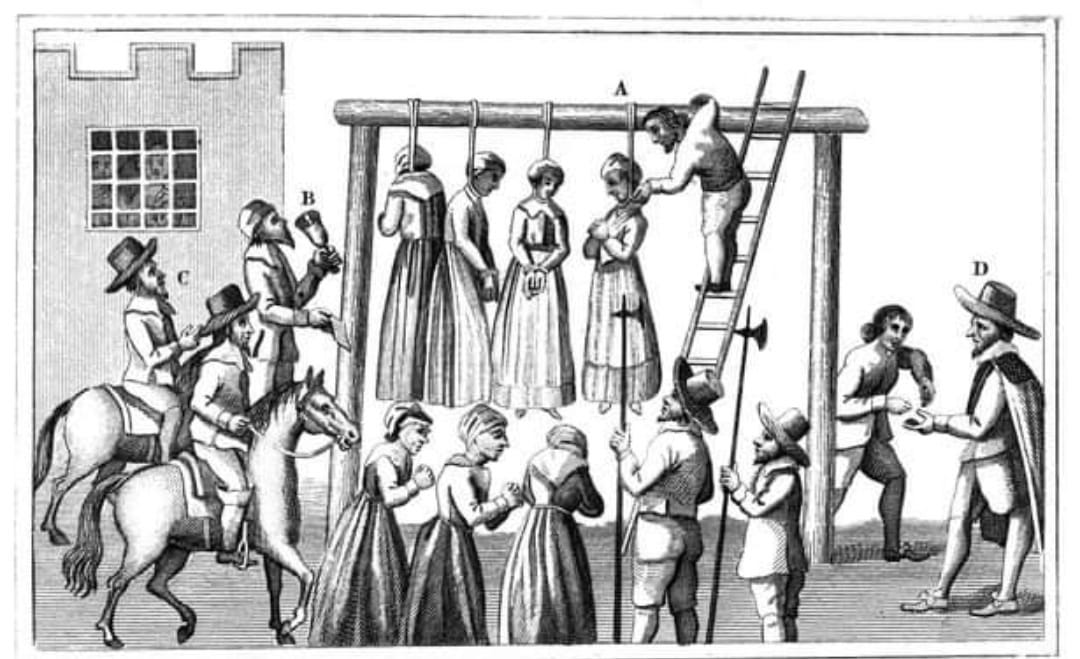
During the witch trials, which did also target men, it’s people who were accused and scapegoated for what was going wrong at the time. People who were accused were those who raised suspicion in the community. And it’s a bit of a myth that they were all women who were healers or midwives. They weren’t. I identify with that.
I’ve lived an alternative life, you could say, and I felt on the outside of society in ways. My first teaching post and job was in the north, in the thick of the miners’ strike. And I was a southerner, who was very green and some of my colleagues at the school didn’t speak to me for months.
I brought it to a head one day and asked them, ‘What’s going on? Why are you giving me short thrift all the time?’ And they said, ‘You embody everything we fought against during the strike.’
In the end, I had great relationships with people, but in that beginning, I was an outsider.
It’s about ‘othering’ people and how we can have misconceptions of people, for all kinds of reasons and misinformation, but when you get to know someone on a personal level those judgements can quickly fall away.
Q: Did you have to reach a certain point in life Sue, practically or emotionally, to write ‘Molly’?
Yes, absolutely. I was in therapy after suffering with my mental health. And, without going into too much detail, I hadn’t realised how childhood trauma had impacted my life and, over half a century, had taken a toll.
One day, I had a massive row with my mother and later, in a supermarket car park, I met someone I vaguely knew. She saw me and asked, ‘Are you okay?’ And I said, ‘No, I’m not okay’ and I started telling her bits of my story.
Then she told me that she was a retired psychotherapist, who deals specifically with people with eating disorders. I said, ‘Oh my God! Can I come and talk to you?’ She said, ‘Well, I’m retired, but I do still see some people.’
I ended up going to see her for two years and during that time, a lot came out, which I had cut out of my mind. She said, ‘You should write some of this down’ and I said, ‘Do you know what? I’ve always wanted to write.’
And she told me to go and do a master’s degree in creative writing at Newcastle university, but I had no belief in myself. ‘I’m not academic enough. I’m not clever enough,’ I said. ‘Bollocks,’ she said. ‘Go and do it.’
I was 58. At rock bottom. I’d left teaching after having a breakdown. But here I now was at a prestigious university starting an MA in creative writing. But I had to get to that place. I had to go through things. I had to rage. I had to find my voice. And I did. I have. And more. I’ve found my story.
Q: Earlier, how did you handle and overcome rejections from literary agents for ‘Molly’?
I didn’t handle rejections for ‘Molly’ very well, if I’m being honest. As I’ve said, my default position is, ‘I’m not good enough’, so when you’re rejected it’s awful. You take it personally. I submitted ‘Molly’ in batches of 10 and straight away I got a request for the full manuscript and they asked for exclusivity while they read it. I thought, ‘This is it. I’ve made it!’ But no, they said it wasn’t right for them, and that happened again. Lots of positive comments, but ultimately a final comment of it not being right for them.
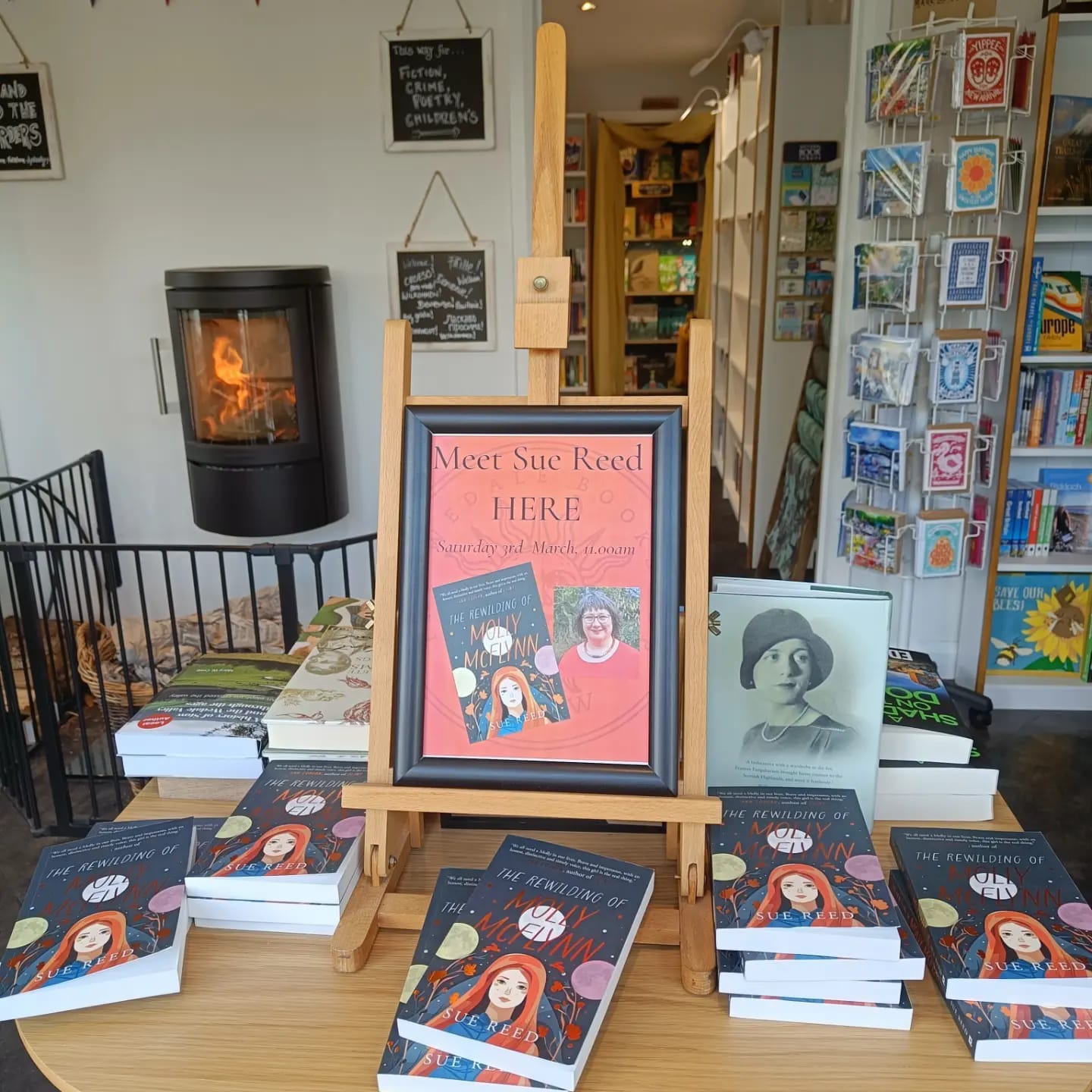
At that point I thought okay, I’m not going to do this. I lost faith. I thought my book was rubbish. I genuinely didn’t know if it was good or not. Fortunately, I had friends and family rallying me, who said, ‘Sue, it’s a good book, you need to get it out there.’ It was that support that re-galvanised me.
I learnt how hard it is to get represented, but however hard it is, we must never give up. We have to have self-belief. I haven’t got a thick skin, but it’s starting to toughen up. I have got a bit of a shell now! And I’ve learnt that when somebody says your writing’s not right for their list, it’s not right for their list full stop. Your writing isn’t rubbish.
Q: What would you say is behind your success with ‘Molly McFlynn’?
Marketing and social media presence is behind the success I’ve had. I had a wonderful following as the ‘Woolly Pedlar’, in my previous business and as me as a brand and a person. My lifestyle. You don’t have to show every aspect of your life on social media, but certainly the areas of your life which relate to what you’ve written about in your book.
It’s about being inventive. Learn how to pitch. I once did a one-day course on pitching and it was brilliant. Pitch to magazines, pitch to podcasts. People aren’t going to come to you. You have to get yourself out there. Build relationships with local bookshops, so they know who you are. You can’t just walk in and say, ‘I’ve written a book, are you going to put it on your shelves?’
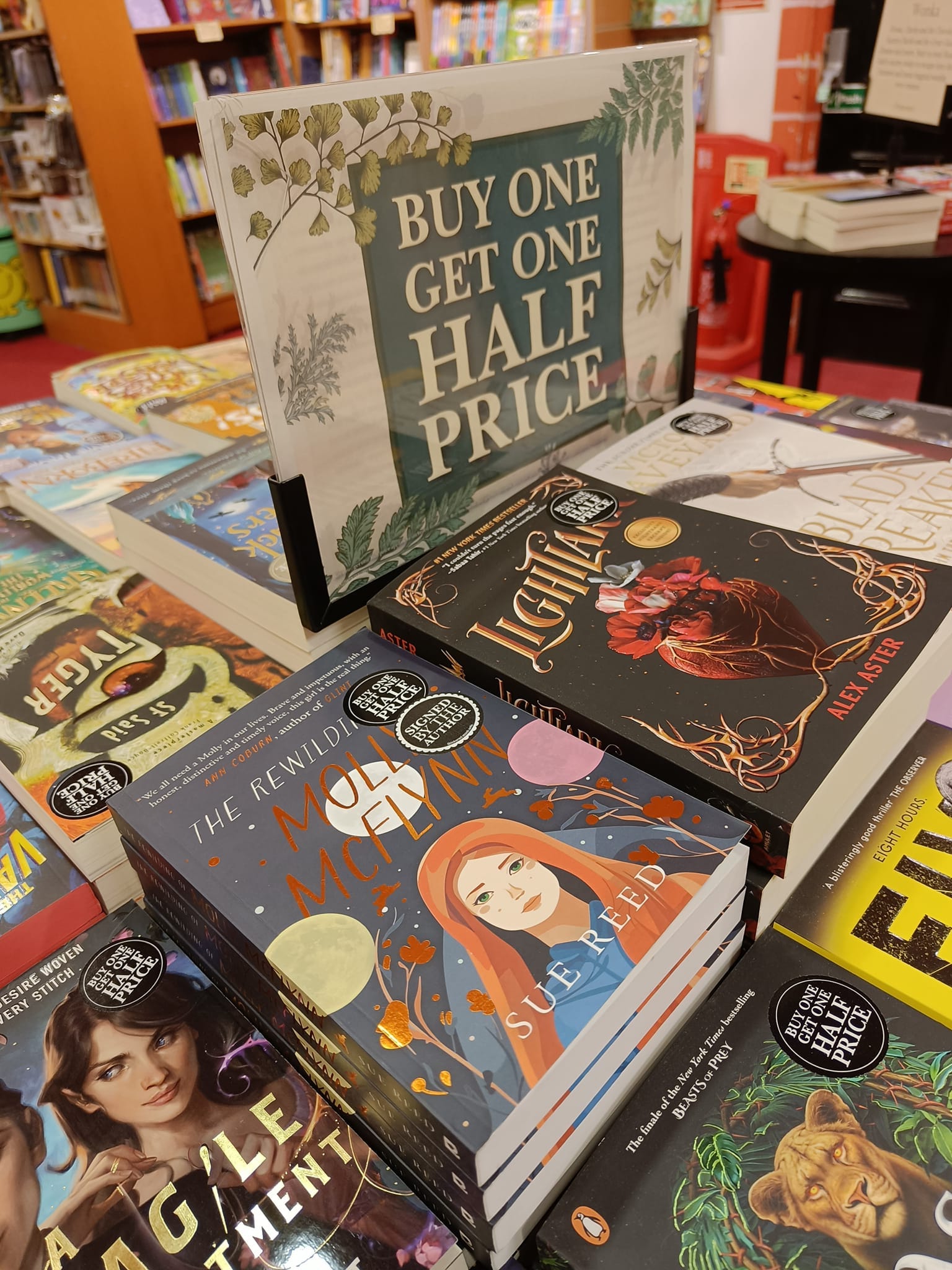
Work hard on promotion. Stick your neck out and be a bit brazen. Aim high. I got in touch with Waterstones Newcastle and asked if I could come in to the store and do a book signing. I didn’t wait for them to approach me.
Do you remember that Yellow Pages TV advert about JR Hartley? I do that. I ring bookshops up and say, ‘Hello, can you tell me if you have ‘The Rewilding of Molly McFlynn’ in stock? At which they say, ‘No, we don’t, but we can order it in for’.
And I say, ‘I don’t actually need a copy. I need to come clean with you at this point and say that I’m Sue Reed, the author of ‘The Rewilding of Molly McFlynn’. I can then get some comments back, but nearly always they say, ‘Yeah, it looks great, we’ll get it in stock and see how it goes’.
I must have done that with 25 bookshops and only one came back and said, ‘Look, I’m terribly sorry, we just don’t have room. We’re tiny shop’.
Your publisher might say, ‘That thing is not the done thing’. Well, I didn’t take that. We have a saying up here in the North East, ‘Shy bairns get nowt’.
I think it’s important as an author to build relationships with local press in your area. I know I’ve won sales of my book from that, because Waterstones has told me how people come in looking for my book, because they read about it in the paper.
And I write and I thank people for their support, like the area buyer for Waterstones in the North East. Lovely guy. When I went into a store for a book signing, he was chatting to me, wanting to know more, so follow that up. Keep that relationship going. Be a person, and not just a name on a document.
‘What are your readers interested in?’
My default position in life is, ‘I’m not good enough’. I think I work extra hard in life to prove that I am. My husband will say to me, ‘Just have a day off, relax’, but I don’t know how to do that. I guess if you’re going to use social media today to promote your book properly, you have to do it.
I ran a business before writing ‘Molly’ and I learnt some social media marketing tips which really worked and I built an audience of about 5,000 followers on Facebook. They followed me across to ‘Sue Reed Writes’, my author profile on Facebook, which was massive because they were supporting me as a person.
I guess a lot of that audience are women my age and they become like friends, because when you’re marketing a book I think you have to go beyond that. Who is your reader? What are they interested in that I’m interested in? What themes from your book can you talk about on social media more broadly?
I hear some authors complain, ‘Oh, I haven’t got time for social media. I’m busy writing my book’, but you have, because I find it’s ‘little and often’ on social what works. Keep conversations going.
Q: If someone’s reading this Sue, and they’ve always felt they had a novel in them, what advice would you give them?
You might not think you can do it, but you can. Break it down. Start small. Start writing, even if it’s as simple as writing a journal and writing down whatever comes into your head. No one ever has to see it, but it releases something in that creative process. It gets you going.
And give yourself the time to do it. I bet you could give up half an hour a day of scrolling through your phone. It’s amazing what you can do in half an hour. There are 24 hours each day. You can spare 30 minutes. Just do it.
Author’s note: read and follow Sue’s own newsletter, here on Substack, Down Clarty Lonnen
Inspiring story! It’s never too late… :)